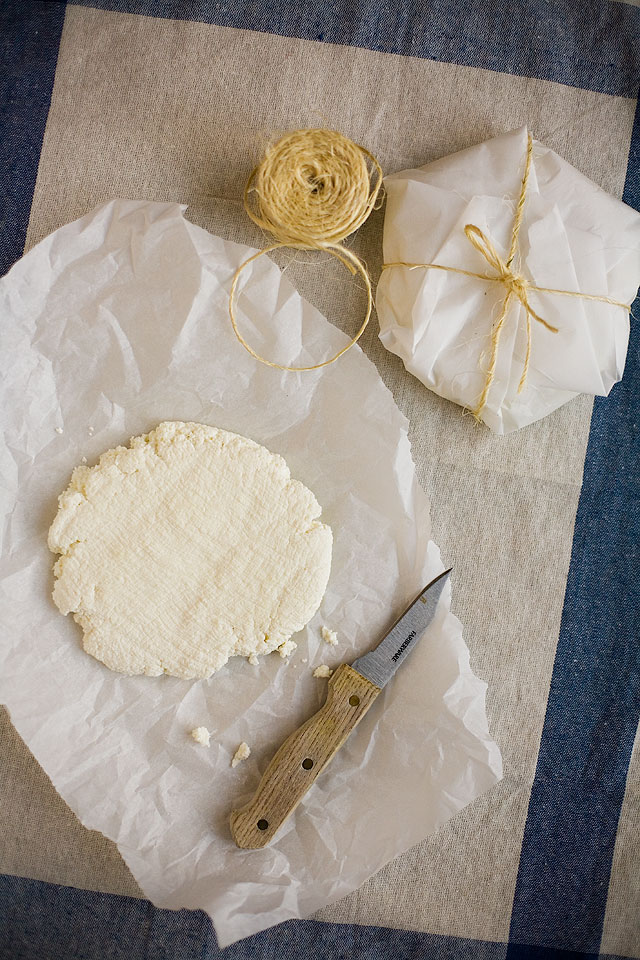
Next month it will be one year since Indian Simmer came into existence and in this short span of time, I am so blessed to have touched so many people and their lives in some way. It sometimes surprises me when I think of how appreciative everyone has been of what I'm doing here and I get overwhelmed when I read your emails and messages. Sometimes with a kind word of appreciation, sometimes with a critique and sometimes with a request. Recently one such request came from @everynothing (her real name is Tricia, just so you know!) and she requested that I share my recipe for Matar Paneer. And being a lazy bum that I am, I mulled over it for quite a while. Finally, I picked it up yesterday. As soon as I started working on it, I knew that I have to make paneer at home - because I know what store bought tastes like! I had attempted this a few times before and every time it had turned out "not so pretty". My search for the paneer holy grail took me to Radhika's blog where she had shared her own method. I tried it and that was the first time my paneer tasted like "paneer".

For those who are not familiar with paneer, it is a type of cheese very common in Indian cuisine and is a good source of protein. But unlike most of the cheeses it doesn't need rennet for coagulation. Instead, a form of food acid is added to hot milk which helps in the curdling process. The common food acids used are lemon, vinegar or yogurt. The curdled milk is then collected in a cheese cloth, hanged for sometime for all the excess water to drip out and then also pressed under weight for a few hours to squeeze the remaining water out (this also gives a firm shape to paneer). This might sound like a lengthy process, but it is so worth it! Now, making paneer at home is not exactly rocket science but there are a few subtle things/tips that I've realized can make or break the deal. So let me list them real quick before sharing the actual recipe.
Deal breaker tips in the process of making paneer at home:
- Try stirring the milk with a plastic spatula while heating it. Stirring will prevent the milk from sticking to the bottom. But if some milk still sticks to the bottom and burns, a plastic spatula will not scratch the bottom and spoil the whole milk.
- Stop the cooking process as soon as the milk curdles. I add ice to the milk. This way your paneer won't come out rubbery.
- Don't hang your paneer for too long. Take it off as soon as water stops dripping.
- The fat % in the milk doesn't really change the way it tastes, the type of acid used DOES. But the taste variance is so minute that I can't really tell a difference.

Ingredients:
1/2 a gallon of milk (equals 1.8 liters)
3 1/2 tbsp lemon juice
You will also need:
3-4 cups of ice
Cheese cloth
Method:
Boil milk in a thick bottom pan. Stir it from time to time to keep it from sticking at the bottom.
Once the milk is boiling, turn off the heat and add lemon juice while stirring it continuously.
It will take just a few seconds for the milk to curdle and that's exactly the time you have to stop the cooking process, so add ice to the pot.
Let it sit for about a minute and then strain it through strainer lined with cheese cloth. Once again wash the collected cheese with cold tap water (this helps wash that extra lemony flavor).
Take all the sides of the cheese cloth and tie them together. Hang it somewhere to let the extra liquid drip off (place an empty bowl below it for the liquid to collect).
Once the liquid (or whey) stops dripping, take out the cheese and make a big ball of it. Wrap again with the cheese cloth. To press the cheese and give it a shape, place it over a chopping board and put a heavy pan or pot over it. (I usually use my wrought iron pan and to add more weight I put a few cans of beans on top of it).
Let it sit for an hour or so.
In an hour you'll have your homemade paneer which you can use to make all kinds of things. I made Matar Paneer with mine!